
Whole-Home Remodel vs. Moving: Which Makes More Sense?
When a home no longer works for the way you live, there are usually two major choices: transform the property you already have or find another home. The better direction depends on what is wrong with the current house, what the property can realistically become and how much you value the location you already have.
If you love the location but not the house, remodeling deserves a serious look.
If the location, lot and neighborhood still work for your household, but the kitchen, layout, finishes, storage or amount of living space no longer do, a whole-home remodel may allow you to keep what you like while changing what you do not.
Moving becomes a stronger consideration when the property itself cannot reasonably support what you need, when the desired changes are not feasible for the home, or when you no longer want to remain in that location.
The real decision involves the existing property, the changes required to make it work, the alternative homes actually available and the disruption associated with either construction or moving.
What changes when you remodel instead of move?
Neither option is automatically right. The comparison becomes much clearer when you identify which parts of your current situation you want to keep and which parts you are trying to change.
Whole-Home Remodel
You remain in the location and neighborhood you already know.
The existing home may be reworked within the practical limits of the property and approved project.
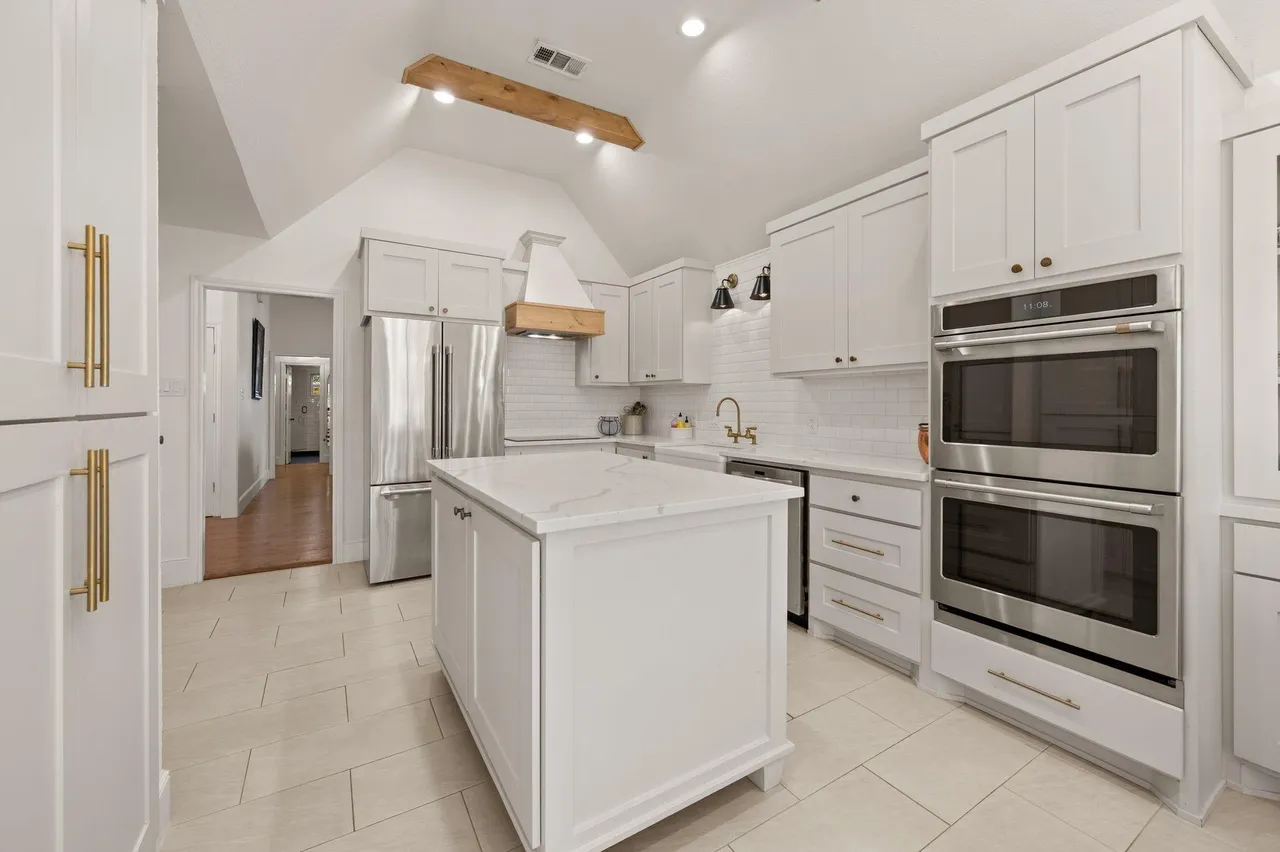
You can select the kitchen, bathrooms, flooring, surfaces and other finishes included in the remodel.
Existing space can potentially be reconfigured, and a home addition may be another option when feasible.
Construction becomes part of the decision and may affect how the home is used while the remodel is underway.
Move to Another Home
Moving gives you the option to change neighborhoods, communities or the type of property entirely.
You search for a home that already provides more of the layout and space you want.
The next home may still require remodeling if the existing finishes do not match your preferences.
A different home may solve size or lot limitations that cannot reasonably be changed at the current property.
The disruption shifts from remodeling to preparing, selling, purchasing and physically moving between homes.
When comparing the two options, consider whether the homes you would realistically purchase already have the kitchen, bathrooms, layout and finishes you want—or whether you may buy another home and remodel that one too.
When should you seriously consider remodeling instead of moving?
A remodel becomes especially worth evaluating when the things you dislike about the home can potentially be changed while the parts you value most are already there.
The neighborhood is not the problem.
If you like where you live, changing the home may be more appealing than giving up the location simply to get a better kitchen or floor plan.
The structure can potentially become what you need.
A dated or poorly configured home may still have strong potential when the property and proposed remodeling scope support the desired direction.
You need the home to function differently.
Kitchen relationships, living areas, storage and other room connections may be more important than simply adding more square footage.
You like the house but not what you see.
Cabinetry, countertops, flooring, bathrooms, paint and other finishes can dramatically affect how an existing home feels.
An addition may solve the problem.
When the property supports it, adding space can sometimes address a bedroom, living-area or primary-suite need without leaving the current home.
Build the finished direction around your priorities.
A remodeling project allows selected materials and spaces to be planned around what you want rather than accepting every decision made by a previous homeowner.
Sometimes the problem is bigger than the kitchen or floor plan.
A contractor can help evaluate remodeling possibilities, but there are situations where the homeowner may decide that changing properties makes more sense than trying to make the current home become something it cannot reasonably be.
You no longer want to live there.
Remodeling can change the home, but it cannot move the property to another neighborhood or community.
The property cannot support what you want.
Available space, lot configuration and applicable property requirements may limit certain expansion or outdoor project directions.
The home is fundamentally too small for your needs.
If the desired finished home requires substantially more space, the feasibility and value of expanding the existing structure should be evaluated carefully.
You want a different type of property.
Sometimes homeowners are no longer searching for an improved version of their current home—they want a different lot, setting, community or style of living.
A useful construction conversation should help you understand what the current property can potentially become. Once that is clearer, you can compare that option against what moving would actually provide.
Ask these six questions about your current home.
The answers can help separate a home that needs to be improved from a property that no longer fits your household at all.
Would I still choose this location?
If the house were already remodeled exactly how you wanted it, would you still be happy living on this property and in this area?
What specifically does not work?
Write down the actual problems: kitchen size, storage, bedrooms, bathrooms, flow, dated finishes, outdoor space or another issue.
Can those problems realistically be changed?
Some problems may be addressed through remodeling, reconfiguration or an addition. Others may be limited by the property or existing structure.
Would another home truly solve everything?
Compare the current home against properties you would actually consider buying—not against an imaginary perfect house.
Would I remodel the next house too?
If every realistic replacement home would still need a new kitchen, bathrooms or flooring, include that in your comparison.
What do I want the next five to ten years of the home to look like?
Consider whether the remodeled property would continue to support the way your household expects to use the home in the years ahead.
Common questions homeowners ask before making the decision.
There is no universal answer. The decision should be based on the actual property, the changes you need and the alternative homes available to you.
It depends on why the current home no longer works. If you still value the location and the problems can realistically be addressed through remodeling, staying may deserve serious consideration. If the location, property or fundamental size of the home no longer fits, moving may make more sense.
A substantial remodel can change finishes, kitchens, bathrooms, flooring and other selected areas of the home. Depending on the approved scope and existing structure, some layout changes may also be possible.
A home addition may be worth evaluating if the property and proposed project support it. Visit our Home Additions page for more information.
That is a different financial and real-estate decision from remodeling a home for your own use. The appropriate scope would depend on why the work is being considered and your plans for the property.
The existing home and proposed changes need to be reviewed. Photos and plans can provide an initial starting point, but feasibility depends on the actual structure and approved project scope.
Seaco offers whole-home remodeling for larger renovation projects involving multiple areas of an existing home. The exact scope should be developed around the property and homeowner's goals.
Financing options are available for qualifying projects. Eligibility, approval and actual terms depend on the financing program and applicant. Visit our Financing page for more information.
Send the property address, current photos, any available plans and a list of what you want to change. Explain which parts of the home are working today and which parts are causing you to consider moving.
Find out what your current home could realistically become.
If the home is making you consider moving, show us what is not working. Understanding the potential remodeling scope can give you something real to compare against the alternative of buying another property.
Send the property address, current photos and a list of what you would change if you stayed. Include kitchen, bathroom, layout, storage, bedroom, living-space and addition goals when they apply.
Jacksonville, FL 32226
CGC1530266